Source laundering: how weak sources come out of AI looking strong
Source laundering is when an AI answer restates a weak source in the same confident, polished prose it uses for strong ones. A content farm and a peer-reviewed study sound identical, and the reader inherits the weakness without seeing it. The undo is a three-question check on the source: who wrote it, on what evidence, with what incentive.
Updated
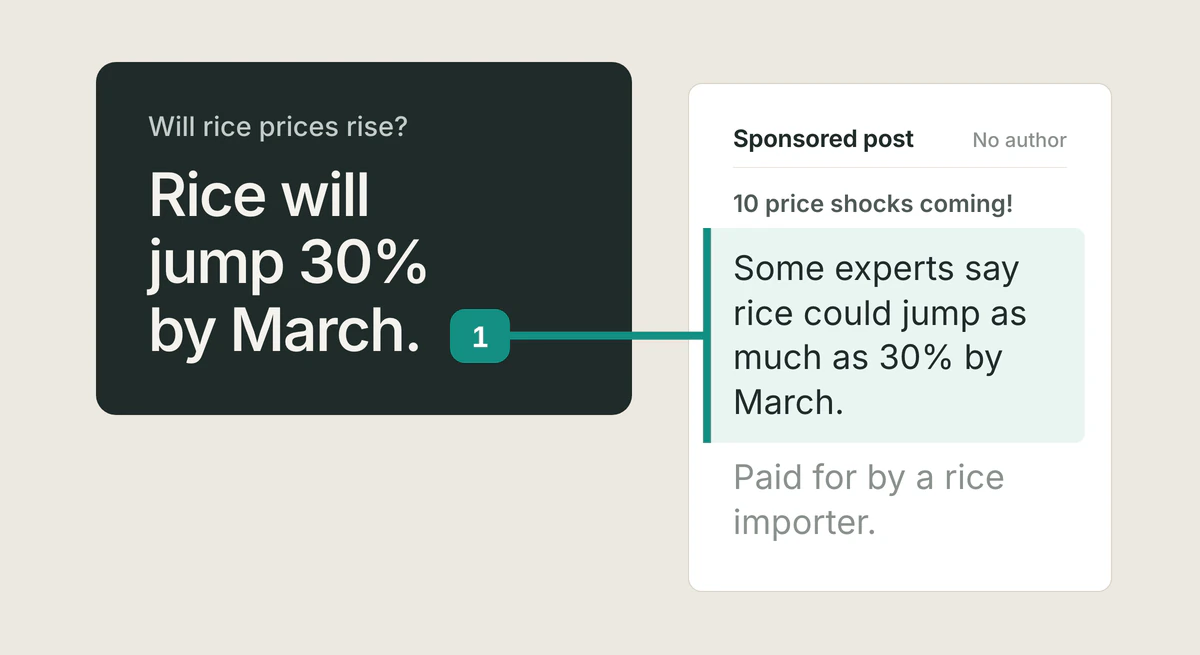
Why does a weak source sound strong in an AI answer?
An AI answer rewrites every source in one calm, confident voice and strips the warning signs a junk page carries on the open web. The weakness survives; only the warning labels are gone.
Ask an AI about a health claim, a market size, or a legal rule, and the answer arrives in one seamless voice. Behind sentence two sits a methodical government dataset. Behind sentence four sits a page written to rank, by no one in particular, sourced from nothing checkable. In the answer, both sentences sound exactly the same.
That flattening is the laundering. On the open web, a junk page at least looks like a junk page: the ads, the padding, the anonymous byline all warn you. Inside an AI answer, those signals are stripped and the content is rewritten in the assistant's calm, authoritative register.
Why can't the AI check its sources for you?
Retrieval systems rank sources by relevance and extractability, not by epistemic quality. Whether a source deserves belief is a question about the world, not about the text, and the pipeline never asks it.
A page that answers the query directly, in clean structure, with quotable sentences, gets pulled, and content farms have optimized for exactly that shape. Columbia's Tow Center measured the downstream result: AI search engines misattributed or fabricated sourcing on more than 60% of test queries, with even the best engine wrong 37% of the time.
Judging whether a source deserves belief requires knowing who stands behind it, what evidence it rests on, and what it was written to achieve. Sentence-level citations tell you where a claim came from; they cannot tell you whether where it came from is any good.
How do you tell whether a source is trustworthy?
Ask three questions of the source itself: who wrote it, on what evidence, and with what incentive. The check takes about thirty seconds per source and undoes laundering by asking the questions the machine skipped.
Who wrote it? A named expert, an institution with a reputation to lose, or nobody findable. Anonymity is not disqualifying, but it removes the accountability that lets you borrow confidence.
On what evidence? Primary data, named studies, and linked documents, or just assertions with the grammar of evidence. Follow one citation deep: pages that cite pages that cite nothing are a genre.
With what incentive? Written to inform, to rank, or to sell. Incentive does not automatically falsify, but it tells you where the author stopped checking.
Do you need to check every source?
No. Spend the check on claims you will repeat, numbers that drive decisions, and anything that surprised you; skip it for the free tier of your work and for sources you have already checked.
Thirty seconds per source is cheap, but not free, so spend it where laundering costs the most. Surprise is the highest-value trigger, because a surprising claim from a weak source is the single most viral form of laundered content.
That free tier is the same boundary the team verification flow draws. And notice the compounding trick: sources you have checked once, your own library of vetted documents and trusted references, do not need re-checking every time. That is the quiet argument for doing serious work over a curated corpus instead of the open web: the source-quality check gets done once, upstream, instead of per-answer, forever.
Curation is the check, done once
This is exactly why Tatsulok is built around libraries rather than open-web retrieval. Your own documents are sources you already stand behind. Because you vetted the library once, at the moment you added each document, every answer drawn from it inherits that provenance instead of laundering it. Each claim still links to its exact passage, and gaps are stated honestly, so both layers of the check, the passage and the source, are one click deep.
This week's drill, no signup needed: take one AI answer with sources and run the three questions on each source it cites. Score them: how many were written by someone findable, on evidence you can follow, to inform rather than to rank? That score, more than the answer's fluency, is what the answer was worth.
FAQ
- What is source laundering in AI answers?
- The flattening effect where an AI restates weak and strong sources in the same confident prose, stripping the visual and contextual warning signs a junk page carries on the open web. The weakness survives; the warning labels are removed.
- Why do AI tools cite low-quality sources?
- Retrieval ranks by relevance and extractability, which content farms optimize for, not by epistemic quality. The Tow Center measured AI search engines misattributing or fabricating sourcing on more than 60% of test queries.
- How do I evaluate a source an AI cited?
- Three questions, thirty seconds: who wrote it (findable author or institution), on what evidence (primary data and followable citations), with what incentive (to inform, rank, or sell). Spend the check on claims you will repeat and anything that surprised you.
- Is a citation to a real page enough to trust a claim?
- No. A resolving link proves existence, the passage check proves support, and the source check proves the origin deserves belief. Laundering specifically survives the first test and often the second; only the third exposes it.
- How does using a curated corpus prevent source laundering?
- Curation performs the source-quality check once, upstream, for the whole corpus, so every answer inherits vetted provenance. In Tatsulok, answers come from your own documents, with each claim linked to its exact passage.
Sources
Related guides
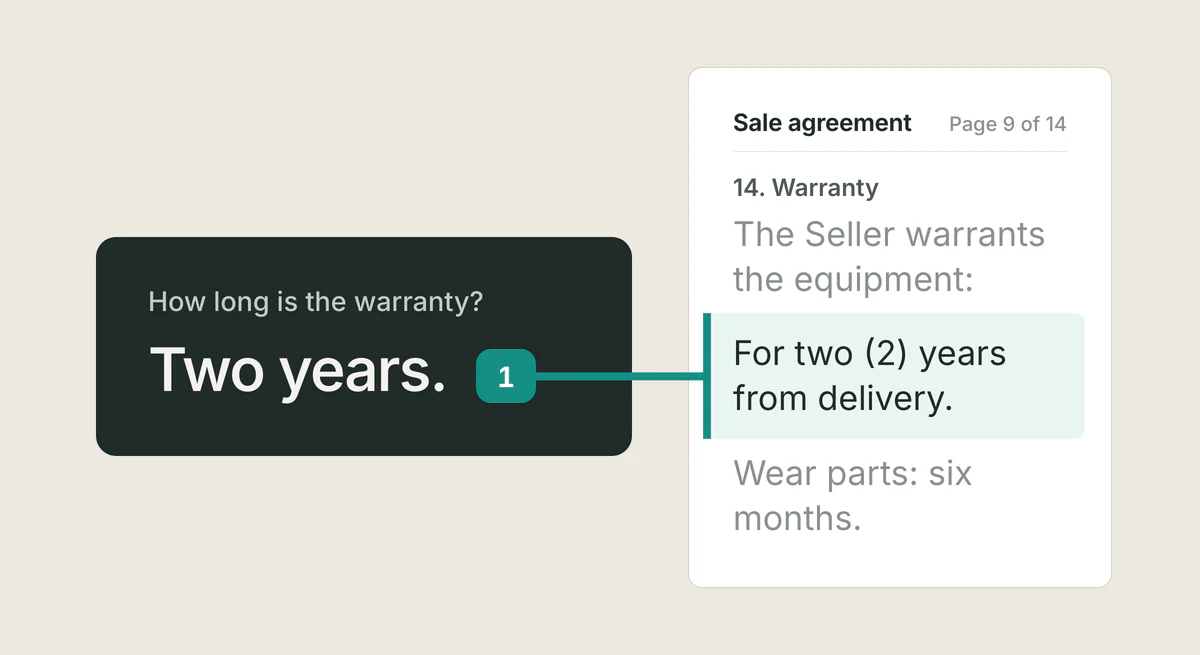
Citations you can open
Tap a citation in a Tatsulok answer to see the exact line it came from, on its page. Try it on a real paper, without signing in.
Read the article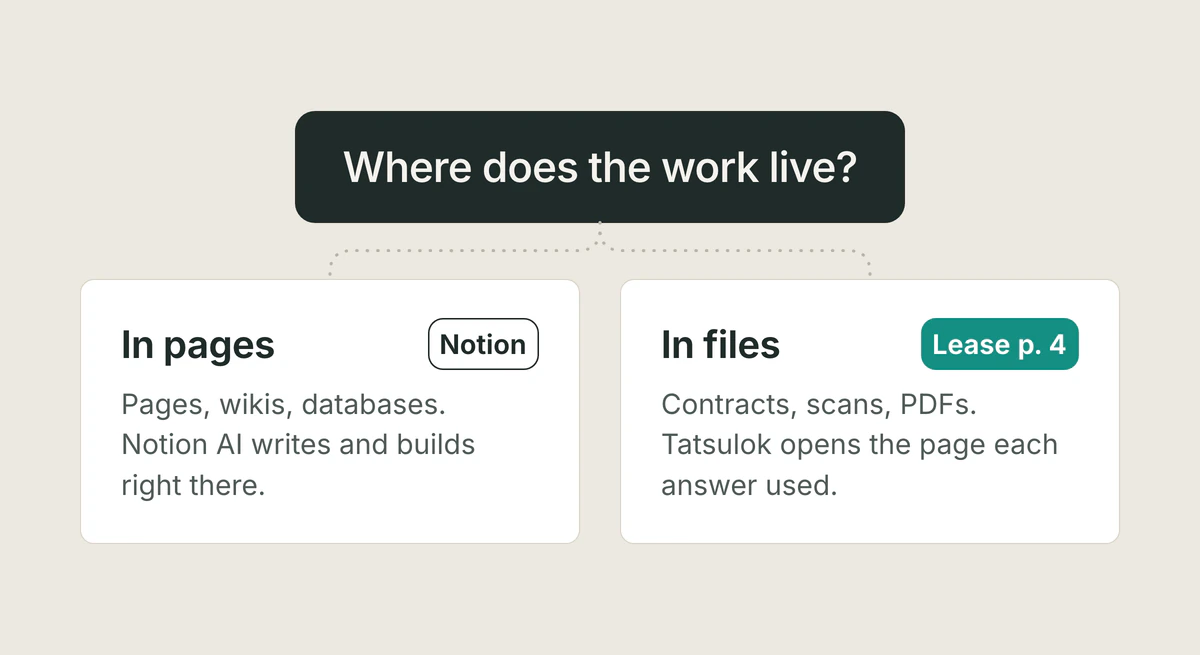
Notion AI alternative
Notion AI or Tatsulok? What each does with your documents, the plans, AI credits and training settings (checked 11 November 2026 on Notion's own pages), where Notion wins, and who should pick which.
Read the article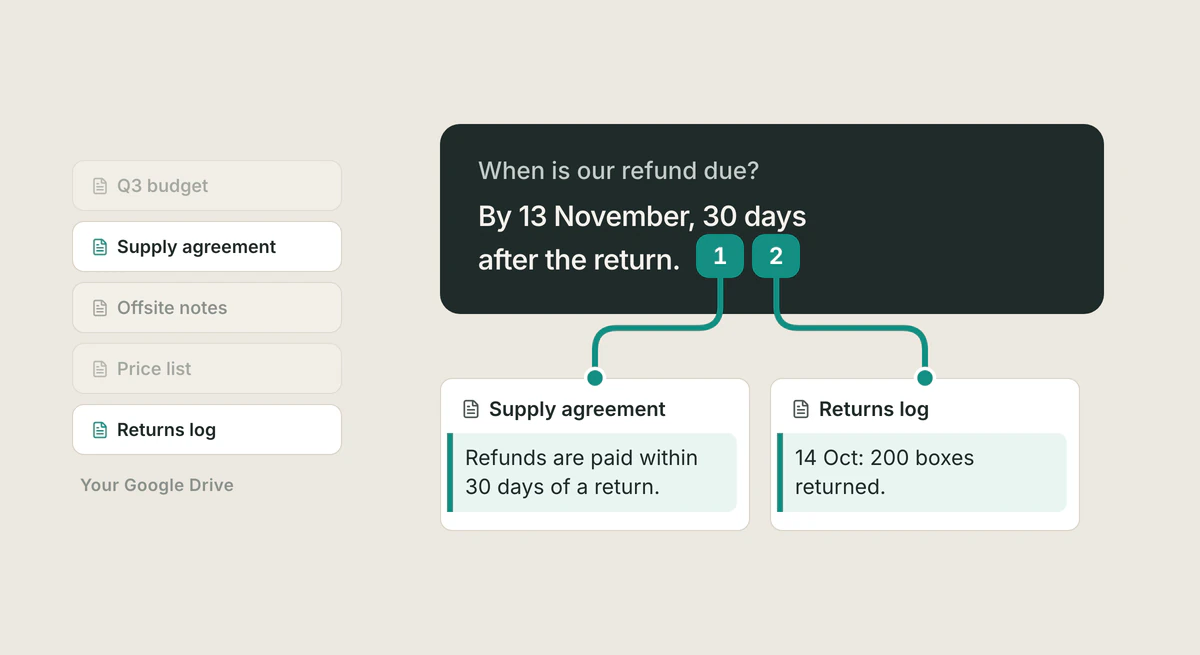
Answers from your Google Drive
Connect Drive, ask, and open the file and passage behind each answer. What drive.file and whole-Drive access mean, and what ChatGPT, Claude, Gemini and Notion do with your files (checked 14 October 2026).
Read the article